
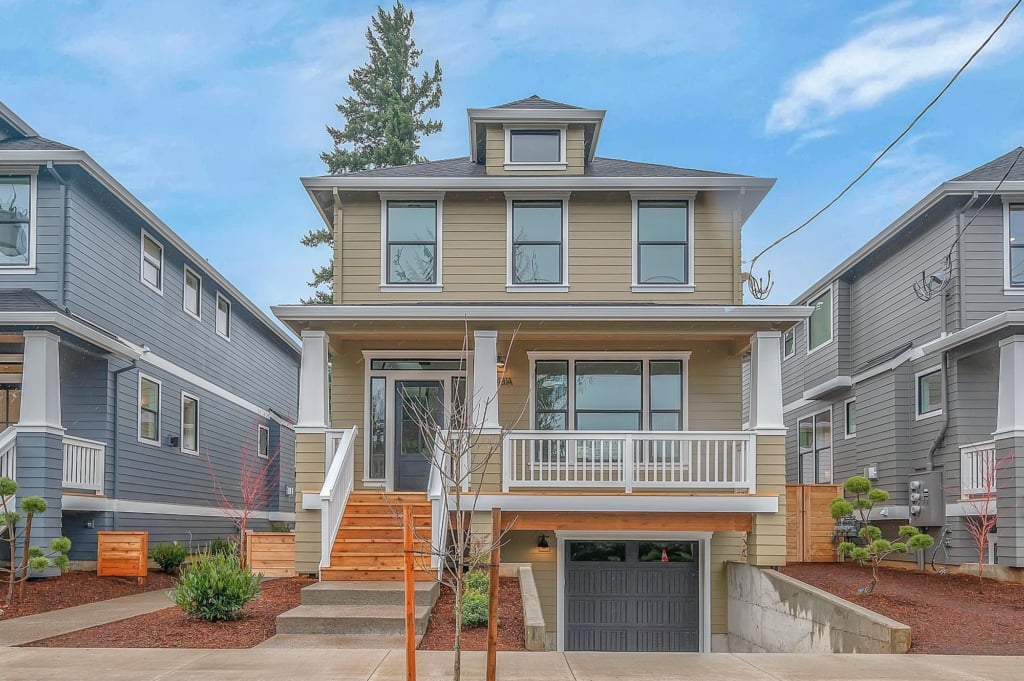
Buying a New Construction Home in Portland?
Here’s Why You Should Have Your Own Real Estate Agent
Guest post by Tom Hall, Paris Group Realty, LLC
Buying a brand-new home has undeniable appeal. Everything is fresh. The appliances have never been used. The floors have never been scratched. Depending on when you buy, you may even get to choose your finishes, fixtures, flooring, or other details before construction is complete.
 It can also seem simpler than buying an older home.
After all, there’s no previous homeowner. There may be fewer obvious repairs to worry about. The builder may have a sales office, a model home, a preferred lender, and someone ready to walk you through the buying process.
So do you really need your own real estate agent when buying a new construction home?
You do you, of course, but buying directly from a builder does not necessarily make the transaction simpler, and the builder’s sales team isn’t there specifically to represent your interests.
Those distinctions matter.
When you’re buying new construction, you aren’t just choosing a house. You may be evaluating the builder, lot, floor plan, upgrades, financing incentives, HOA documents, construction timeline, warranties, inspection opportunities, contract terms, and eventual resale potential.
Having a real estate professional on your side can make those decisions a lot easier.
Who Does the Builder’s Sales Representative Work For?
This is one of the most important things for buyers to understand.
The friendly person welcoming you into a model home may be incredibly helpful and knowledgeable about the development. But the builder’s sales team is there to sell the builder’s homes.
If a licensed real estate agent is representing the seller, Oregon law requires that agent to be loyal to the seller, among other legal duties. Your buyer’s agent, on the other hand, represents you.
That doesn’t mean you and the builder have to be adversaries. Far from it. A good transaction works best when everyone communicates well and is working toward a successful closing.
It simply means you should know who is sitting on which side of the table.
Think of your buyer’s agent as the person helping you evaluate the entire purchase rather than simply the home being offered for sale.
Oregon Buyers Should Also Know About Buyer Representation Agreements
The process of working with a buyer’s agent has changed in Oregon in recent years.
Oregon now generally requires a broker or principal broker who is helping someone search for or purchase residential real estate to work under a written Buyer Representation Agreement. The agreement establishes the relationship between the buyer and agent, including the services being provided, the length of the agreement, termination provisions, and how the agent may be compensated.
This is actually useful when you’re considering new construction because it creates an opportunity to talk about representation and compensation before you walk into a builder’s sales office.
And that’s when I recommend getting your agent involved: early.
If you’re thinking about touring new developments or model homes, talk with your real estate agent first. Individual builders can have their own procedures regarding buyer agents, registration, forms, and compensation, so it’s better to understand the process before rather than after you’ve found the house you want.
1. Your Agent Can Help You Compare Builders, Not Just Houses
Most buyers naturally focus on the house. How many bedrooms does it have? Do you like the kitchen? Is there enough storage? Where does your furniture go?
Your agent can help you zoom out.
Who’s building it? What other projects has the builder completed? What does the surrounding development look like? What homes are planned nearby? What’s included in the base price versus shown as an upgrade in the model?
In Portland, “new construction” can include everything from a single infill home on an established street to townhomes, cottage-style developments, detached homes built several at a time, or larger planned communities in the surrounding metro area.
Each comes with different considerations.
A good buyer’s agent can help you compare properties in the context of the larger Portland real estate market rather than evaluating each home in isolation.
2. An Agent Can Help You Understand What You’re Actually Buying
Model homes are designed to impress. That’s the point.
The beautiful model you tour, however, may contain thousands of dollars in upgrades that aren’t included with the base home.
 The flooring may be upgraded. The countertops may be upgraded. The lighting package, appliances, cabinets, landscaping, window coverings, built-ins, or even certain structural options may cost extra.
When you’re excited about a house, it can be surprisingly easy to mentally attach the model home’s finishes to the advertised starting price.
Your real estate agent can help you separate three things:
- What’s standard
- What’s an upgrade
- What actually matters to you
That last category is particularly important.
A $10,000 upgrade isn’t automatically a good investment just because you love it. And an inexpensive upgrade isn’t automatically worthwhile simply because the builder offers it.
Some choices could improve your day-to-day enjoyment of the home. Some may improve future marketability. Others may simply be things you like—and that’s okay, too.
Your agent can help you think through the difference.
3. New Construction Can Still Be Negotiable
A common assumption is that builder pricing is fixed. Sometimes it is. But the purchase price is only one piece of the transaction.
 Depending on the builder, development, inventory, construction stage, and current market, there may be opportunities to negotiate or receive incentives involving things such as:
- Closing-cost credits
- Interest-rate buydowns
- Financing incentives
- Appliance packages
- Upgrades
- Design-center credits
- Landscaping
- Window coverings
- Lot premiums
- HOA-related expenses
- Move-in-ready inventory
Builders sometimes have strong reasons for keeping recorded sales prices relatively consistent within a development. As a result, an incentive that improves the buyer’s overall deal may occasionally be more realistic than simply asking for a lower price.
This is where having an agent who understands both the market and the builder’s priorities can be particularly useful.
4. Builder Financing Incentives Deserve a Closer Look
Many builders have relationships with preferred lenders and may offer substantial incentives if you use them.
Those incentives can be valuable.
They also need to be evaluated as part of the complete financing package.
An attractive closing-cost credit doesn’t automatically mean that loan will be your best option. You still want to consider the interest rate, loan fees, points, mortgage structure, and long-term costs.
Your buyer’s agent isn’t your mortgage professional, but we can help make sure you’re asking the right questions and introduce you to lenders who can provide additional options for comparison.
When a builder is offering a financing incentive, the goal shouldn’t simply be to ask, “How much money are they giving me?”
The better question is, “What does this loan actually cost me?”
5. New Construction Contracts Can Be Very Different
Buying a completed resale home and buying a home that’s still being built aren’t exactly the same transaction.
 Builders may use their own purchase agreements with provisions addressing construction schedules, materials, substitutions, upgrades, deposits, financing, inspections, delays, warranties, and closing.
And construction does sometimes change.
The exact product originally specified might become unavailable. Weather can affect schedules. Permitting or supply issues can create delays. A buyer may request a change that affects both price and completion timing.
Your real estate agent can help you identify important dates and provisions, track the transaction, and flag questions that deserve more attention.
We’re also here to recognize when something goes beyond the scope of a real estate broker and recommend that you consult an attorney, inspector, lender, contractor, tax professional, or another appropriate expert.
Part of good representation is knowing when another professional needs to enter the conversation.
6. Your Agent Can Help You Think About Resale Before You Buy
You’re probably not thinking about selling your brand-new house while you’re standing in the model home deciding between cabinet colors.
But I am.
Not because I want you to sell it.
Because today’s exciting design decision eventually becomes tomorrow’s resale feature.
Your agent can help you think about lot location, floor plan, parking, storage, bedroom configuration, outdoor space, nearby development, upgrade choices, and other features through the eyes of both today’s buyer—you—and a potential future buyer.
For example, paying extra for a finish you love might be completely worth it.
Paying a substantial premium for something highly specific that doesn’t add much functionality or appeal to other buyers is a different decision.
You should absolutely make your new home feel like yours. It’s just helpful to understand which choices are personal preferences and which may have broader market value.
7. Yes, You Should Still Consider Inspecting a Brand-New Home
One of the biggest new construction myths is:
“It’s new, so what could possibly be wrong?”
 New doesn’t mean perfect.
Homes are complicated. They are built by many different people, trades, and subcontractors. Even excellent builders can have items that need correction.
Depending on the stage of construction and the builder’s policies, buyers may have opportunities for independent inspections at different points during the process. Your inspector can explain which inspections make sense for the particular property.
Local government inspections are also an important part of construction. For example, Portland requires permits to receive final approval before they are considered complete. But municipal inspections and a buyer’s independent home inspection serve different purposes.
Your agent can help coordinate inspection timing, communicate findings, and keep track of items that need follow-up.
The goal isn’t to hunt for problems.
It’s to make sure the brand-new home you’re buying is as ready for you as possible.
8. We’ll Help With the Final Walk-Through and Punch List
 One of my favorite parts of buying new construction is seeing the finished product after months of plans, selections, construction, and anticipation.
It’s also the moment to slow down.
Before closing, buyers typically have an opportunity to walk through the completed property and identify items that need attention.
This might include anything from paint touch-ups to an adjustment on a cabinet door or another incomplete or damaged item.
Your agent can help you stay organized during this process so you’re not trying to remember everything while simultaneously thinking, “I can’t believe we finally get the keys!”
We’ll help document questions, communicate with the builder, and understand which items are supposed to be completed before closing and which may be handled afterward.
9. Oregon New-Home Warranties Are Worth Understanding
A warranty is another area where Oregon buyers should pay attention to the details.
Oregon law requires contractors building new homes to make a written offer of a new-home warranty to the owner or first purchaser. The contract must indicate that the warranty was offered and whether the buyer accepted or rejected it.
That does not mean every new-home warranty is identical.
The Oregon Construction Contractors Board (OCCB) notes that coverage varies. A warranty may address structural components, major home systems, workmanship, or other items, but individual warranty terms and coverage periods differ. Oregon law does not prescribe one universal warranty period.
Read the warranty.
Know how requests are submitted. Understand what’s covered, what’s excluded, how long different portions of the warranty last, and who you contact if an issue appears.
And keep that paperwork somewhere you can actually find it six months after moving in.
10. You Have Someone to Call After Closing
Real estate relationships shouldn’t end when you get the keys. After moving into a new construction home, questions inevitably come up.
- Who should I contact about this warranty item?
- Was this something the builder was supposed to complete?
- Who do you know for landscaping?
- Would adding this feature make sense for resale?
- What are homes in my neighborhood selling for now?
Your agent becomes a long-term real estate resource rather than someone who simply helped write the offer. That’s one of the biggest reasons I believe buyers benefit from having their own representation from the beginning.
 Should You Use a Realtor® When Buying New Construction?
You can buy a new construction home without having your own real estate agent.
The better question is whether you want to navigate the transaction without someone specifically representing your interests.
The builder knows new construction.
The builder knows its contracts.
The builder knows its inventory.
The builder knows its processes.
As your buyer’s agent, my job is to help you understand them, evaluate your options, ask better questions, negotiate where opportunities exist, manage deadlines, coordinate inspections, and think beyond the excitement of the model home to whether this is truly the right property and purchase for you.
That’s valuable whether you’re buying a home that’s still a dirt lot, walking through a nearly finished spec home, or choosing between several new developments around the Portland metro area.
Frequently Asked Questions About Buying New Construction
Do I need a Realtor® to buy a new construction home in Oregon?
You aren’t required to have your own real estate agent simply because you’re buying new construction. You can choose to purchase without buyer representation. However, when an Oregon real estate broker begins assisting you in searching for or purchasing residential property, a written Buyer Representation Agreement is generally required.
Does the builder’s sales agent represent me?
Don’t assume that they do. The sales team is there to facilitate sales for the builder. If a licensed real estate agent represents the seller, that agent owes duties to the seller. A buyer’s agent provides representation specifically for the buyer.
Who pays my buyer’s agent on new construction?
Buyer-agent compensation is negotiable and should be clearly explained in your Buyer Representation Agreement. Depending on the transaction, a builder or seller may offer compensation toward the buyer’s agent’s fee, but buyers should not assume that representation is automatically “free.” Your agent should explain the compensation arrangement before you begin shopping.
 Can you negotiate the price of a new construction home?
Sometimes. It depends on the builder, inventory, stage of construction, development, and market conditions. In some situations, builders may be more receptive to offering upgrades, financing incentives, closing-cost assistance, or other concessions than reducing the home’s base price.
Should I get an inspection on a new construction home?
I recommend discussing independent inspections with your agent and a qualified home inspector. New homes still involve dozens of trades, systems, materials, and installations. Municipal building inspections are important, but they aren’t a substitute for having an inspector working specifically for you evaluate the property.
When should I contact a real estate agent if I’m considering new construction?
Before you start touring model homes.
Builder policies regarding buyer agents can vary, so involving your agent from the beginning helps avoid confusion and ensures you understand both your representation and the builder’s procedures before you’ve fallen in love with a particular house.
Thinking About Buying a New Construction Home in Portland?
New construction can be exciting, but there’s a lot more to the purchase than choosing a floor plan and picking countertops.
Having an experienced real estate professional in your corner gives you someone who can help you evaluate the builder, understand the transaction, compare your options, negotiate where possible, coordinate inspections, and keep an eye on the big picture from your first model-home tour through closing day.
If you’re considering a new construction home in Portland or anywhere in the surrounding metro area, I’d love to help you explore your options.
Thomas I. Hall
Paris Group Realty, LLC
tomhall@parisgrouprealty.com
971-409-5926