Why Buying New Construction in Portland Deserves a Closer Look
Guest post by Tom Hall
Portland loves an old house.
Craftsman porches. Built-in dining room hutches. Leaded glass. Original hardwood floors. We have neighborhoods full of houses with character, history, and architectural details that would be incredibly expensive to recreate today.
I love those houses, too.
But there’s another side to buying a 75-, 90-, or 110-year-old Portland home: you aren’t just buying the house. You’re also inheriting everything everyone before you has done—or hasn’t done—to it.
Sometimes that history is beautifully documented. Sometimes it is not.
That’s one reason I think buyers should give buying new construction in Portland a serious look. A brand-new home may not have a 1920s built-in buffet, but it offers something an older house never can: a clean slate.
No previous owner. No decades of deferred maintenance. No wondering who remodeled the bathroom in 1997, whether the basement leak really was fixed, or why one circuit breaker appears to control half the house.
Everything starts with you.
And depending on what matters most to you as a homeowner, that can be pretty compelling.
1. There Are No Mysteries From Past Owners
 This may be my favorite argument for new construction.
When you buy an existing home, you’re buying its history along with it.
Maybe a previous owner was meticulous about maintenance and kept every invoice since 1984. Fantastic.
Or maybe three owners ago someone decided YouTube had taught them enough electrical work to add six outlets and finish the basement themselves.
Less fantastic.
Even a well-maintained older home can leave buyers with questions. When was that plumbing line replaced? Is that wall original? Why is there a patch in the ceiling? Was that addition permitted? Is the discoloration under the sink old or new?
Inspections and disclosures help tremendously, but there will almost always be things you simply cannot know about a house that has been occupied, repaired, remodeled, and modified for decades.
With a newly constructed home, the story begins with you.
That doesn’t mean new construction is automatically perfect. New homes should still be inspected, and buyers should understand exactly what they are purchasing.
But you aren’t trying to reconstruct the home’s biography from clues. There is something reassuring about that.
2. Builder Warranties Can Provide an Extra Layer of Protection
Another significant advantage of buying new construction is the builder warranty.
Warranty coverage varies from builder to builder, so buyers should always review exactly what is covered, how long different components are covered, how claims are submitted, and what exclusions apply.
But this is an important distinction between new construction and most resale homes.
If you move into a 1948 house and discover six months later that a component has reached the end of its useful life, that repair is generally yours.
A newly built home may have warranty coverage addressing certain workmanship, materials, systems, or other components during specified periods.
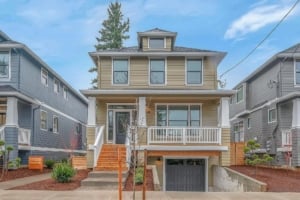
Several of the new homes we’re currently representing at Artisan at Ramona, for example, are listed with a home warranty.
That doesn’t replace a home inspection, and it doesn’t mean you’ll never have a maintenance item.
It does mean you’re beginning homeownership from a very different place than someone buying a house with decades-old components and an unknown repair history.
3. Your To-Do List May Be Surprisingly Short
One of the most common things I hear when showing older homes is:
“We could live with that for a while.” And then “a while” becomes eight years.
The kitchen backsplash needs to go. The carpet needs replacing. The exterior needs painting. Three windows are fogged. The water heater is 16 years old. The electrical panel should probably be updated. The upstairs bathroom is functional, but definitely not anyone’s first choice.
None of those items individually may be a dealbreaker. Collectively, they can represent a lot of time and money.
New construction changes the starting point.
You’re generally moving into a home with new flooring, new appliances, new plumbing fixtures, new electrical systems, new roofing, new siding, new windows, new HVAC equipment, and contemporary finishes.
Instead of budgeting for the projects you need to tackle immediately, you may actually get to unpack.
Radical concept, I know.
4. New Homes Are Designed Around the Way We Live Now
Housing preferences change.
Think about how differently people use their homes today compared with 50 years ago.
We work from home. We want flexible spaces. Kitchens are gathering spaces instead of rooms hidden behind swinging doors. Buyers think about storage, charging devices, entertaining, guest space, laundry location, and how rooms might change functions over time.
New construction gets the benefit of starting with those expectations.
That can mean open kitchen and living areas, larger islands, more intentional storage, bedroom suites, flexible lower levels, better-connected indoor and outdoor spaces, and floor plans that don’t require you to figure out what to do with a tiny formal room designed for a lifestyle that disappeared decades ago.
That doesn’t mean every buyer wants an open floor plan or every old home has an awkward layout.
It simply means new homes can be designed from the beginning around what today’s buyers actually ask for.
5. Modern Systems Can Mean Fewer Immediate Capital Expenses
 Here’s the part of buying a house that isn’t particularly glamorous:
Roofs are expensive.
So are furnaces.
So are sewer lines, windows, water heaters, siding, electrical panels, plumbing, and pretty much everything else you discover while owning real estate.
When we look at an older resale home, one of the things I pay attention to is not simply whether those systems work today. I want to know approximately how old they are.
A furnace can be operating perfectly and still be near the end of its expected useful life.
The same is true of a roof.
With new construction, those major components are starting at year zero.
You’ll still need to maintain them. Homes do not become maintenance-free merely because they’re new.
But there’s a meaningful difference between buying a home with a brand-new roof and buying one where the inspector tells you, “It has maybe three to five years left.”
That difference should be part of the financial calculation.
6. Energy Efficiency Has Improved
Portland has plenty of beautiful older homes that have been thoughtfully upgraded for efficiency.
It also has plenty that haven’t.
New construction benefits from modern building practices, insulation standards, windows, heating and cooling equipment, appliances, lighting, and other systems that simply weren’t available when many Portland homes were built.
That can affect comfort as much as utility consumption.
Better insulation and modern windows can help rooms maintain more consistent temperatures. New HVAC systems may offer heating and cooling that older Portland houses were never designed to provide. Efficient appliances and fixtures can reduce resource use without requiring you to replace anything after moving in.
At some of my recent listings (Artisan at Ramona), for example, homes includes features such as double-pane windows and modern heating and cooling systems, and individual homes have received strong Home Energy Scores out of the gate.
It’s worth comparing those features when you’re looking at your total cost of ownership—not simply the purchase price.
7. New Construction in Portland Doesn’t Have to Mean Moving to the Edge of Town
 I think some Portland buyers hear “new construction” and immediately picture a giant subdivision 30 miles outside the city.
That certainly exists.
But it isn’t the only option.
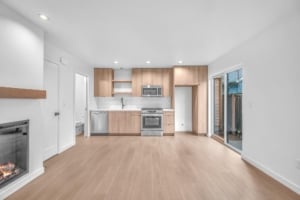
Portland’s new construction market also includes infill development: new homes built within established neighborhoods where the parks, restaurants, businesses, streets, and community already exist.
That gives buyers an interesting middle ground.
You can have a brand-new home without necessarily giving up the experience of living in an established Portland neighborhood. You still get the Portland vibe – the houses just happen to be brand new.
8. Less Yard Can Actually Be a Feature
This is one of those areas where buyers should be realistic about what they actually want rather than what they’re told they’re supposed to want.
Do you genuinely want a giant yard?
Some people absolutely do.
They want garden beds, fruit trees, a big lawn, a play structure, chickens, or enough space to spend every Saturday between April and October doing yard work.
Great. Buy the yard.
But plenty of people want outdoor space without wanting outdoor maintenance to become a hobby.
Smaller-lot and cottage-style new construction can offer a different version of homeownership: private outdoor space, patios, porches, or fenced areas without an enormous amount of landscaping to maintain.
For someone who would rather spend Saturday exploring Portland than mowing it, that can be a positive.
What About Portland’s Famous Old-House Character?
This is the tradeoff.
If your dream is an untouched 1912 Craftsman with original millwork, leaded-glass windows, pocket doors, and a built-in buffet, I am probably not going to talk you into new construction.
And I shouldn’t.
The goal isn’t to convince every buyer that new is better than old.
The goal is to think clearly about what you’re actually prioritizing.
If architectural history is near the top of your list, an older Portland home may be exactly right.
If your priorities lean more toward predictable maintenance, modern systems, efficient use of space, warranty coverage, flexible rooms, and being able to move in without immediately starting a renovation spreadsheet, new construction starts looking pretty appealing.
Neither is universally better.
They’re simply different ways to spend your housing budget.
A Portland Example: Artisan at Ramona
This is where all of this becomes a little less theoretical.
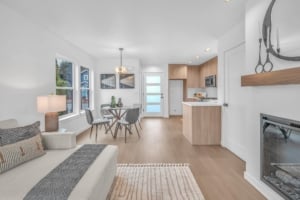 We currently have several new construction homes available at Artisan at Ramona in Southeast Portland.
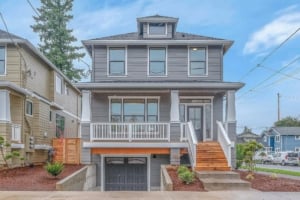
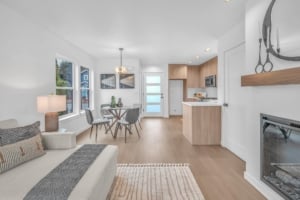
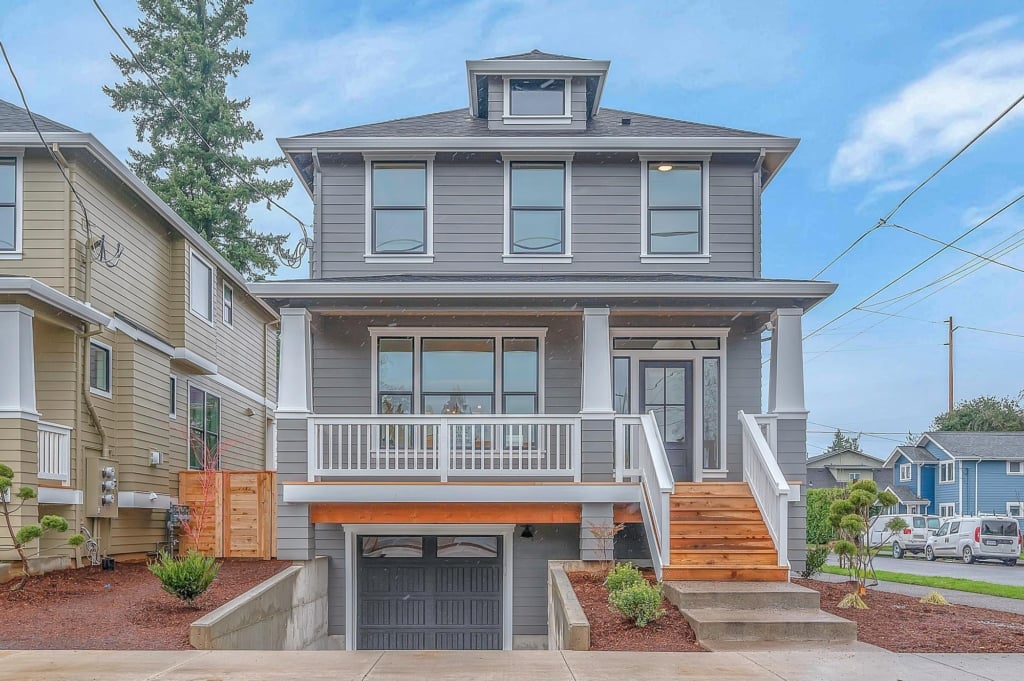
The three larger homes at 6471, 6481, and 6491 SE Ramona Street each offer four bedrooms and 3.5 bathrooms. The 6471 home is approximately 1,968 square feet, while the 6481 and 6491 homes are approximately 2,382 square feet. The floor plans include flexible lower-level spaces with kitchenettes and bathrooms that could be used for guests, working from home, hobbies, or additional living space.
They also deliver many of the things I think buyers sometimes underestimate when comparing new construction with resale homes: contemporary finishes, lots of natural light, modern systems, private outdoor space, storage, and a home that nobody else has lived in before you.
You can explore the current listings here:
Should You Buy New Construction in Portland?
Maybe.
That’s not a very exciting sales pitch, but it’s the right answer.
Buying new construction in Portland makes a lot of sense for buyers who value predictability, newer systems, current layouts, lower near-term maintenance needs, warranty protection, and the ability to know exactly where the story of their house begins.
An older Portland home can offer incredible charm.
A new Portland home offers something different: fewer unknowns.
And when you’re spending this much money, knowing exactly what you’re buying has quite a bit of value.
If you’re curious about new construction in Portland, come take a look before deciding whether it’s for you. We can compare new homes with resale options, talk through builder warranties and inspections, look at the numbers, and help you figure out which type of house actually makes the most sense for the way you want to live.
Frequently Asked Questions
Is buying new construction in Portland worth it?
For many buyers, yes. New construction can offer newer major systems, modern layouts, energy-efficient features, builder warranty protection, and fewer immediate repair or remodeling projects. The value depends on the buyer’s priorities and how the home compares with available resale properties.
Do new construction homes come with a builder warranty?
Many do, but warranty terms vary by builder and property. Buyers should review what is covered, the length of coverage, exclusions, and the process for requesting repairs before purchasing.
Should I still get an inspection on a brand-new home?
Yes. New does not mean flawless. An independent home inspection can help identify construction or installation issues and gives buyers another opportunity to understand the home before closing.
What are the advantages of buying a new home instead of an older Portland home?
Common advantages include fewer unknowns from previous owners, newer roofing and mechanical systems, contemporary floor plans, improved energy efficiency, less immediate maintenance, and potential builder warranty coverage.
Can I find new construction in established Portland neighborhoods?
Yes. Portland has infill developments and individual new homes throughout established neighborhoods, including Southeast Portland. Buyers do not necessarily have to choose a large suburban development to purchase new construction.
Thinking About Buying a New Construction Home in Portland?
New construction can be exciting, but there’s a lot more to the purchase than choosing a floor plan and picking countertops.
Having an experienced real estate professional in your corner gives you someone who can help you evaluate the builder, understand the transaction, compare your options, negotiate where possible, coordinate inspections, and keep an eye on the big picture from your first model-home tour through closing day.
If you’re considering a new construction home in Portland or anywhere in the surrounding metro area, I’d love to help you explore your options.
Thomas I. Hall
Paris Group Realty, LLC
tomhall@parisgrouprealty.com
971-409-5926