Portland Air Quality: How Do I Clean My Indoor Air?
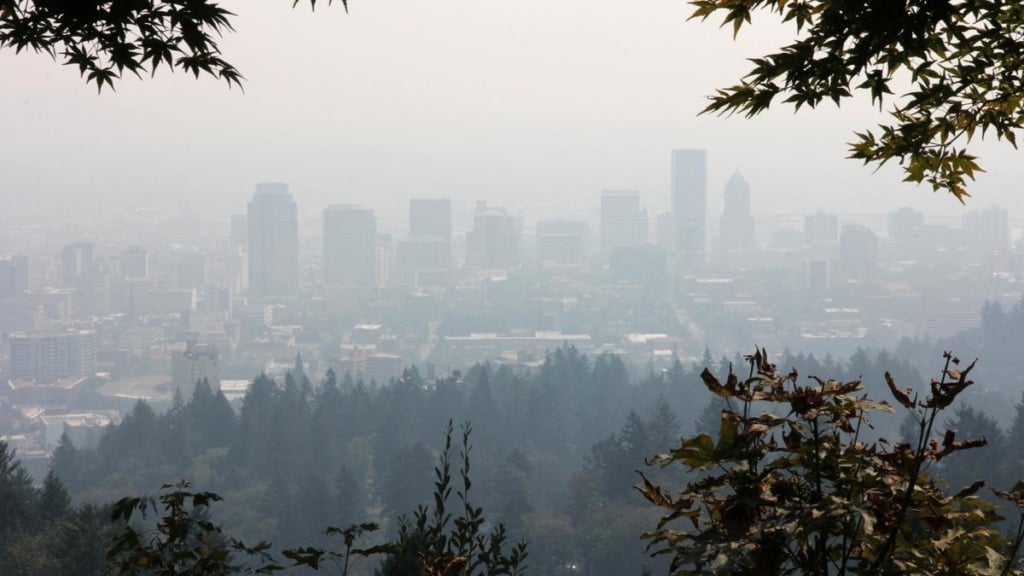
Smoke from wildfires has become an increasingly familiar part of summer in Portland and throughout the Pacific Northwest. Even when a fire is burning hundreds of miles away, shifting winds can carry smoke into the Portland metro area, changing air quality quickly and sometimes causing unhealthy conditions for several days.
When the sky turns hazy, or the smell of smoke reaches your neighborhood, it is important to know more than whether the air “seems bad.” Understanding the Air Quality Index, monitoring reliable local information, and preparing your home before smoke arrives can help reduce exposure and make smoky days more manageable.
Wildfire smoke can affect anyone. However, children, older adults, pregnant people, people with heart or lung conditions, and those who work or exercise outdoors may face greater risks. Fine particles in smoke can travel deep into the lungs and may aggravate asthma and other respiratory or cardiovascular conditions.
The good news is that a few thoughtful preparations can improve the air inside your home. Here is how to check air quality, understand what the numbers mean, and create a cleaner indoor environment during wildfire smoke season.
 Why Wildfire Smoke Is a Health Concern
Wildfire smoke is a complex mixture of gases, water vapor, and particles produced as vegetation, buildings, and other materials burn. One of the primary health concerns is fine particulate matter known as PM2.5.
These particles are 2.5 micrometers in diameter or smaller—small enough to be inhaled deeply into the lungs. Exposure may cause symptoms such as:
- Coughing
- Wheezing
- A scratchy throat
- Burning or watery eyes
- A runny nose
- Headaches
- Fatigue
- Chest tightness
- Shortness of breath
- Worsening asthma or other respiratory symptoms
Wildfire smoke can make anyone sick, but some people are more likely to experience serious effects. Higher-risk groups include:
- Children and teenagers
- Adults over age 65
- Pregnant people
- People with asthma, COPD, heart disease, or other chronic conditions
- Outdoor workers
- People exercising or spending extended periods outside
- People without access to adequately filtered indoor air
Anyone experiencing severe trouble breathing, chest pain, confusion, or another medical emergency should seek immediate medical care. People with chronic health conditions should follow the guidance of their healthcare provider and any existing asthma or respiratory action plan.
The Centers for Disease Control and Prevention (CDC) provides additional guidance about wildfire smoke, health risks, and protection before, during, and after a wildfire.
How to Check the Air Quality in Portland
Smoke conditions can change from one hour to the next. A clear morning does not guarantee a clear afternoon, and air quality may vary between different parts of the metro area.
Rather than relying only on what the sky looks or smells like, check a trusted air-quality source before exercising, opening windows, sending children outside, or beginning an outdoor project.
Oregon Department of Environmental Quality
The Oregon Department of Environmental Quality maintains an Oregon air-quality map with monitoring information from around the state. Oregon DEQ also shares air-quality advisories and smoke information through its website.
The free OregonAir mobile app makes it easier to check current conditions from a phone. Search for “OregonAir” in the Apple App Store or Google Play Store.
AirNow
AirNow.gov is a national air-quality resource operated through a partnership of federal, state, tribal, and local air agencies. Enter a city or ZIP code to see the current AQI and forecast.
During wildfire season, the AirNow Fire and Smoke Map is particularly useful. It displays fine-particle pollution, smoke plumes, fire locations, and readings from regulatory monitors and certain lower-cost sensors.
When comparing readings, remember that conditions can differ across relatively short distances. Look for monitors near your location and consider the overall pattern rather than depending on a single sensor.
Local Forecasts and Advisories
The National Weather Service, local public-health departments, and emergency-management agencies may issue air-quality advisories or share smoke forecasts. Local news can help alert you to a developing event, but the AQI should still be checked for the most relevant conditions near your home.
It is often helpful to use more than one source:
- Check Oregon DEQ or AirNow for current air quality.
- Review the AirNow Fire and Smoke Map for nearby smoke patterns.
- Look for local advisories and forecasts.
- Check conditions again before changing plans.
What Do the AQI Numbers Mean?
The Air Quality Index translates pollution measurements into a color-coded scale ranging from 0 to 500. The higher the number, the greater the potential health concern.
| AQI | Category | General Meaning |
|---|---|---|
| 0–50 | Good | Air quality presents little or no risk for most people. |
| 51–100 | Moderate | Air is generally acceptable, although unusually sensitive people may experience effects. |
| 101–150 | Unhealthy for Sensitive Groups | Higher-risk individuals should reduce prolonged or heavy outdoor exertion. |
| 151–200 | Unhealthy | Some members of the general public may experience effects; sensitive groups may experience more serious effects. |
| 201–300 | Very Unhealthy | The risk of health effects increases for everyone. |
| 301 and above | Hazardous | Emergency conditions; everyone is more likely to be affected. |
These categories provide a framework, but personal health and activity level still matter. A short walk and a strenuous outdoor workout do not create the same amount of exposure. Children running outside, outdoor workers, and athletes generally breathe more deeply and take in more air than someone sitting quietly.
AirNow publishes the current AQI scale and health guidance for each category.
Prepare Your Home Before Smoke Arrives
The best time to prepare for wildfire smoke is before the AQI climbs.
Filters and portable air cleaners may become harder to find during a widespread smoke event. A hot, smoky day is also not an ideal time to discover that your HVAC system needs service or that your air conditioner is not working.
Before wildfire season, consider:
- Replacing or inspecting your HVAC filter
- Learning how your ventilation system brings in outdoor air
- Identifying the highest-efficiency filter your system can safely accommodate
- Buying a properly sized portable air cleaner
- Selecting a room that could serve as a cleaner-air space
- Checking weatherstripping around frequently used doors and windows
- Stocking any necessary medications
- Saving trusted air-quality websites on your phone
- Making a plan for pets, children, older relatives, or household members with health conditions
- Locating well-fitting N95 respirators for times when outdoor exposure cannot be avoided
Preparation does not have to involve an expensive whole-house project. Even one well-filtered room can provide meaningful relief during a short smoke event.
Keep Windows and Doors Closed
When outdoor air quality becomes unhealthy, close windows and exterior doors to reduce the amount of smoke entering the house.
 Avoid opening doors unnecessarily, but do not become so focused on smoke that you overlook indoor heat. Wildfire smoke and high temperatures frequently occur together. A tightly closed home without air conditioning can become dangerously hot.
If your house becomes too warm to occupy safely, seek a public cleaner-air or cooling location rather than remaining in dangerous indoor heat. Libraries, community centers, shopping centers, and other air-conditioned buildings may provide temporary relief, although availability varies during each event.
When the outdoor air improves, opening windows may help air out the house. Check the AQI first; smoke can remain at ground level even when the sky appears somewhat clearer.
Use Your HVAC System Strategically
A forced-air heating or cooling system can help filter indoor air, but its effectiveness depends on the filter, system design, condition, and settings.
 If your central system has a recirculation setting, use it during a smoke event. Close or reduce the outdoor-air intake if the system allows you to do so safely. Some systems automatically introduce outside air, while many residential furnaces simply recirculate indoor air. If you are uncertain, consult an HVAC professional rather than guessing.
A filter must fit properly so air cannot simply travel around it. It also needs to be clean enough for the system to move air effectively.
The U.S. Environmental Protection Agency (EPA) recommends using a MERV 13 filter—or the highest-efficiency filter your system can safely accommodate—to help capture fine particles from wildfire smoke. However, not every older furnace or HVAC system can manage the increased airflow resistance of a high-efficiency filter. An HVAC technician can confirm which filter is appropriate for your equipment. Read the EPA’s wildfire and indoor air guidance.
If your system and filter are compatible, operating the fan more frequently can move more indoor air through the filter. During a severe smoke event, that may mean setting the fan to “On” instead of “Auto.” Check the filter frequently and replace it when dirty.
Do not assume that running the fan with an old, poorly fitted, or incompatible filter will solve the problem. Effective filtration requires the right filter, proper installation, and adequate airflow.
Use a Portable Air Cleaner
A portable air cleaner can reduce airborne particles in a specific room or area. Look for a unit that:
- Is designed for the size of the room
- Uses a high-efficiency particle filter
- Has an appropriate Clean Air Delivery Rate, or CADR
- Can run continuously at a tolerable noise level
- Does not intentionally produce ozone
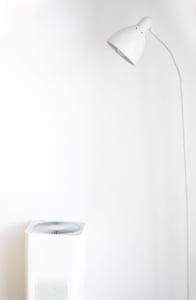 Choose a smoke CADR large enough for the room where the cleaner will operate. A small desktop unit is unlikely to clean the air effectively in a large, open living space.
Run the air cleaner continuously during smoky conditions. Higher fan speeds generally filter air more quickly, although a lower setting that runs consistently may be more practical in bedrooms or workspaces.
Place the unit where airflow will not be blocked by furniture, curtains, or walls. Follow the manufacturer’s instructions for filter replacement and maintenance.
Avoid ozone generators and devices marketed primarily as producing ozone, ionizing the air, or creating “activated oxygen.” Ozone can irritate the lungs and is not a safe solution for occupied residential spaces.
Create a Cleaner-Air Room
If filtering the entire house is difficult, focus your resources on one room.
A cleaner-air room should ideally:
- Have few windows and exterior doors
- Be large enough for household members who need to use it
- Be easy to keep closed
- Stay reasonably cool
- Have a properly sized portable air cleaner
- Contain comfortable seating, water, medication, chargers, and other essentials
 A bedroom often works well because people spend many hours there overnight. Another household may choose a family room where everyone, including pets, can gather.
Keep the door closed as much as practical and run the air cleaner continuously. Avoid activities in that room that generate additional particles.
The EPA offers detailed instructions for creating a cleaner-air room during wildfire smoke.
Consider a DIY Air Cleaner When Necessary
A do-it-yourself air cleaner made with a box fan and a high-efficiency furnace filter can reduce fine particles when a commercial portable air cleaner is unavailable or unaffordable.
A common basic design attaches a MERV 13 filter securely to the intake side of a newer box fan, with the airflow arrow on the filter pointing toward the fan. More advanced versions use multiple filters to increase airflow and filtration.
Safety matters. The EPA recommends using a newer, certified box fan—generally a 2012 model or newer—with modern safety features. Keep the fan away from water, damaged cords, overloaded outlets, unattended children, and anything that could block airflow. Do not use an extension cord unless the manufacturer permits it.
A cardboard shroud around the front of the fan can reduce air recirculation around the blade corners and improve performance. The EPA provides research and instructions for DIY air cleaners used during wildfire smoke.
A DIY unit may be an effective temporary tool, but it should be assembled and operated carefully.
Avoid Creating More Indoor Air Pollution
Closing the house helps keep smoke out, but it can also trap pollutants generated indoors.
 During a smoke event, avoid or limit:
- Smoking or vaping indoors
- Burning candles or incense
- Using a wood-burning fireplace
- Frying or broiling food
- Vacuuming without a high-efficiency filter
- Aerosol sprays
- Strong chemical cleaners
- Activities that create dust
- Running exhaust fans longer than necessary
Kitchen and bathroom exhaust fans push indoor air outside. That air must be replaced, often by outdoor air entering through gaps in the building. Use exhaust ventilation when needed for immediate safety and moisture control, but avoid leaving fans running unnecessarily during heavy smoke.
Gas cooking can contribute to indoor pollution. If cooking generates smoke or excessive heat, choose simpler meals, use a microwave or electric appliance when appropriate, or prepare food before conditions deteriorate.
What If You Need to Go Outside?
Staying indoors in cleaner air is often the best way to reduce exposure during a smoke event, but not everyone can avoid going outside.
When the AQI is elevated:
- Shorten outdoor trips
- Reschedule strenuous exercise
- Take breaks in filtered indoor air
- Keep vehicle windows closed
- Set the vehicle ventilation to recirculate
- Avoid driving through an active fire area
- Follow evacuation orders immediately
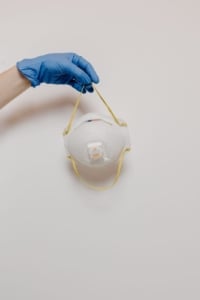 A properly fitted, NIOSH-approved N95 respirator can reduce exposure to smoke particles. It cannot filter hazardous gases and works only when it seals closely against the face. Cloth masks, surgical masks, bandanas, and loose face coverings do not provide the same protection from fine smoke particles.
People with heart or lung conditions should consult a healthcare provider about respirator use, because breathing through one can require additional effort.
Remember that air-quality precautions are different from wildfire evacuation guidance. If authorities tell you to evacuate, leave promptly. Do not remain in a threatened home because the indoor air seems cleaner.
Keep Smoke Out of Your Car
A vehicle can provide a temporary cleaner-air environment if its ventilation system is used correctly.
Close the windows and set the air system to recirculate. Replace the cabin air filter according to the manufacturer’s recommendations, especially after a prolonged smoke event.
Recirculation should not be used indefinitely without breaks, particularly with several occupants, because carbon dioxide and humidity can accumulate. Follow the vehicle manufacturer’s guidance and switch settings when outdoor conditions improve.
A parked vehicle should never be used as a cooling or cleaner-air space in a closed garage. Never leave children, older adults, vulnerable people, or pets unattended in a vehicle.
What About Window Air Conditioners, Heat Pumps, and Portable AC Units?
Not every cooling system brings outdoor air into the home.
Many ductless mini-split heat pumps recirculate indoor air, although their built-in filters may be designed primarily to protect the equipment rather than remove fine smoke particles. A separate portable air cleaner can provide better particle filtration.
Window air conditioners vary. Some have an outdoor-air vent or fresh-air setting that should generally be closed during smoky conditions. Check the owner’s manual to understand how the unit operates.
Portable air conditioners with a single exhaust hose can create negative pressure inside the home, pulling outdoor air through cracks and gaps. Dual-hose models may reduce this effect, although performance varies.
Because equipment differs, consult the manufacturer’s instructions or an HVAC professional if you are uncertain about your system.
After the Smoke Clears
Do not assume the event is over the moment the sky becomes blue. Check local readings and forecasts before opening the house.
 Once outdoor air quality has returned to a healthier level:
- Open windows and doors if weather and security permit.
- Use fans to bring in cleaner outdoor air.
- Replace HVAC or portable-air-cleaner filters if they are visibly dirty or have reached the recommended service interval.
- Wipe hard surfaces with a damp cloth.
- Wash bedding or fabrics that smell strongly of smoke.
- Vacuum with a HEPA-filtered machine when possible.
- Check on household members for lingering symptoms.
- Restock filters and supplies before the next event.
Ash should be handled carefully because it may contain irritating or hazardous material. Avoid dry sweeping or using a leaf blower, which can send particles back into the air. Follow local public-health instructions after a nearby structural or wildland fire.
Persistent smoke odors may require deeper cleaning, especially if windows were open or smoke entered through a damaged building envelope. A strong odor does not provide a precise measure of health risk, but it can indicate that additional cleaning or filtration is needed.
Smoke Preparation for Homeowners, Buyers, and Sellers
Wildfire-smoke readiness is increasingly part of ordinary home maintenance in Oregon and Southwest Washington.
Homeowners may want to ask:
- What type of HVAC system does the house have?
- Does it recirculate indoor air?
- Can it safely use a MERV 13 filter?
- When was the system last serviced?
- Is there a suitable room for portable filtration?
- Do windows and exterior doors close securely?
- Can the home remain safely cool with the windows closed?
- Is there a backup plan during a power outage or prolonged smoke event?
Home buyers can consider these questions during due diligence without expecting a house to be entirely smoke-proof. Features such as central air conditioning, a heat pump, newer windows, and upgraded filtration may improve comfort, but no ordinary home is completely sealed from outdoor air.
Sellers listing during wildfire season should also plan for changing conditions. If the AQI becomes unhealthy, showings, photography, open houses, landscaping work, and exterior maintenance may need to be rescheduled. Indoor air cleaners and a clean HVAC filter can help, but health and safety should take priority over keeping an appointment.
Avoid masking smoke odors with candles, sprays, or strong fragrances. These products can add pollutants to the indoor air and may create additional concerns for buyers with allergies or sensitivities.
Build a Simple Wildfire-Smoke Readiness Kit
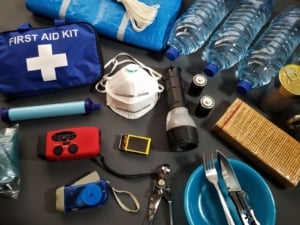 A practical household smoke kit might include:
- One or more correctly sized portable air cleaners
- Replacement air-cleaner filters
- HVAC filters approved for the system
- NIOSH-approved N95 respirators
- Essential medications
- Saline eye drops or other clinician-recommended supplies
- Bottled water
- Shelf-stable foods that require little cooking
- A printed list of emergency contacts
- Phone chargers or battery packs
- Supplies for pets
- Instructions for changing HVAC and vehicle settings
- Links to Oregon DEQ, AirNow, and local emergency alerts
Keep the supplies together and check them before summer. Filters should be stored in a clean, dry location and in their original packaging.
A Safer, More Comfortable Home During Smoke Season
Wildfire smoke is unpredictable, but your response does not have to be.
Monitor the AQI through reliable sources. Close the home before conditions deteriorate. Use compatible HVAC filtration, portable air cleaners, or a carefully constructed DIY unit. Reduce activities that create indoor pollution, and establish a cleaner-air room for household members who need additional protection.
Most importantly, balance smoke protection with other immediate risks. A closed home can overheat, and a threatened home must be evacuated regardless of its indoor air quality. Follow local authorities and seek professional medical advice when symptoms are serious or persistent.
As wildfire smoke becomes a more common part of Pacific Northwest summers, preparing for it belongs alongside cleaning gutters, servicing the HVAC system, and getting the home ready for winter. A little planning can make the next smoky stretch safer and considerably less stressful.
Have questions about buying or selling a home in Portland or the surrounding metro area? Contact Paris Group Realty, LLC by email at info@parisgrouprealty.com or call (503) 926-5213. We would love to help.