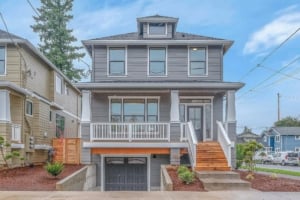

Buying a Foreclosed Home in Oregon
Process, Risks, and Considerations
Buying a foreclosed home can sound like an opportunity to purchase a property below market value. Sometimes it is. A buyer may find a solid home with renovation potential, an investment property with room to build equity, or a residence that would not otherwise fit within their budget.
However, the idea that every foreclosure is automatically a bargain is misleading.
A foreclosed property may have deferred maintenance, undisclosed damage, title complications, occupancy issues, or financing challenges. The transaction can also involve unfamiliar timelines, special contracts, limited seller disclosures, and less negotiating flexibility than a traditional home purchase.
The key is to understand what kind of distressed property you are considering. “Pre-foreclosure,” “short sale,” “foreclosure auction,” and “bank-owned home” describe different stages of the process. Each presents its own opportunities, risks, and purchasing requirements.
If you are thinking about buying a foreclosed home in Portland or elsewhere in Oregon, here is what you should know before deciding whether the potential savings justify the additional uncertainty.
What Is a Foreclosed Home?
Foreclosure is the legal process through which a lender or another lienholder forces the sale of a property after the borrower defaults on an obligation secured by that property. Mortgage foreclosure is the most familiar example, although unpaid property taxes, homeowners association assessments, and certain other debts can also result in foreclosure proceedings.
A homeowner who misses one mortgage payment does not immediately lose the property. Federal mortgage-servicing rules generally prevent a servicer from making the first required foreclosure notice or filing until a borrower is more than 120 days delinquent, with limited exceptions. The timeline from that point forward depends on the applicable laws and the type of foreclosure being used. The Consumer Financial Protection Bureau (CFPB) provides additional information about federal foreclosure timelines.
Oregon allows both judicial and nonjudicial foreclosure.
A judicial foreclosure moves through the court system and may eventually result in a sheriff’s sale. A nonjudicial foreclosure can occur outside the court system when the deed of trust contains a power-of-sale provision. In that situation, a trustee conducts a trustee’s sale after the required notices and procedures have been completed.
According to the Oregon Division of Financial Regulation, an occupant generally must receive a Notice of Trustee’s Sale at least 120 days before a nonjudicial sale. The specific process can vary, and a scheduled sale may be postponed or canceled if the borrower reinstates the loan, completes a loan modification, sells the property, files for bankruptcy, or reaches another resolution.
For buyers, this means a property described online as being in foreclosure may never become available for purchase.
The Four Main Ways Buyers Encounter Distressed Properties
Although people commonly call all distressed properties “foreclosures,” they can enter the market at several different stages.
1. Pre-Foreclosure
Pre-foreclosure generally describes the period after a borrower has defaulted but before the foreclosure sale has occurred. The homeowner still owns the property and may still have options for resolving the delinquency.
Real estate websites sometimes label homes as “pre-foreclosure” based on public notices or other data. That label does not necessarily mean the home is listed for sale. The owner may not want to sell, may have already entered a repayment plan, or may be working with the lender on a modification.
If the homeowner chooses to sell and the expected proceeds will cover the mortgage, liens, closing costs, and other obligations, the transaction may proceed much like a conventional sale. The foreclosure deadline can still create urgency, so communication among the seller, lender, title company, and real estate professionals is especially important.
Buyers should not assume that a homeowner in pre-foreclosure will accept a deeply discounted offer. The owner remains entitled to pursue the best available terms and may need a certain price to pay off the debts attached to the property.
2. Short Sale
A short sale occurs when the proceeds from the sale will not be sufficient to pay everything owed against the property and one or more creditors agree to accept less than the full amount due.
The homeowner may accept a buyer’s offer, but that does not complete the approval process. The mortgage lender—and potentially junior lienholders or other creditors—must review the proposed transaction and decide whether to approve the reduced payoff.
Short-sale approval may depend on the seller’s financial circumstances, the property’s market value, the lender’s appraisal or broker price opinion, the offer terms, and how the proceeds will be distributed. The lender may counter the price, reject certain concessions, or require changes to the agreement.
For buyers, the greatest challenge is often timing. Review can take weeks or months, and approval is never guaranteed. A foreclosure deadline may also continue to approach while the short sale is under consideration.
A buyer pursuing a short sale should be prepared for:
- A longer and less predictable approval process
- Additional lender-required forms and addenda
- Limited repairs or seller-paid improvements
- Possible restrictions on closing costs or other concessions
- Multiple lienholders with competing requirements
- A foreclosure sale that may need to be postponed
- The possibility that the lender will reject the transaction
A short sale can still be worthwhile, particularly when the buyer has flexibility and the property is a strong fit. It simply requires realistic expectations.
3. Trustee’s Sale or Sheriff’s Sale
A foreclosure auction occurs after the required foreclosure process has progressed to the sale stage. In Oregon, a nonjudicial foreclosure typically culminates in a trustee’s sale, while a judicial foreclosure may result in a sheriff’s sale.
Auction purchases are substantially different from buying a home through a conventional listing.
The property may not be available for a full interior tour. The buyer may have little or no opportunity to conduct inspections before bidding. Financing contingencies may not be permitted, and the successful bidder may have to provide funds according to strict auction requirements.
There may also be occupants in the home. Those occupants could include the former owner, tenants, or other parties whose legal rights must be evaluated. Winning an auction does not necessarily mean the buyer can immediately enter the property or take physical possession.
Oregon law contains detailed rules regarding possession after a trustee’s sale, including different considerations for former owners and bona fide tenants. Buyers should consult a qualified Oregon attorney before bidding on an occupied property or whenever possession rights are unclear.
Before an auction, buyers should also investigate:
- The legal description of the property
- Which interest is being foreclosed
- Senior and junior liens
- Unpaid property taxes
- Municipal or utility assessments
- Homeowners association claims
- Pending lawsuits or bankruptcy proceedings
- Easements, restrictions, and other recorded documents
- Occupancy status
- The condition of the property
- Auction payment and deposit requirements
This is generally the most complex and risky stage at which to purchase a foreclosed property. It tends to attract experienced investors who have access to cash, understand title research, and can absorb significant repair or legal expenses.
4. Real Estate Owned or Bank-Owned Property
If no third party purchases the home at the foreclosure sale, the lender may take ownership. The property then becomes real estate owned, commonly called REO or bank-owned property.
An REO home is usually the most accessible type of foreclosure for a typical homebuyer. The lender may list the property through a real estate broker, allowing buyers to tour it, submit a written offer, obtain a title report, and request an inspection.
However, the lender did not live in the home and may have limited knowledge of its history or condition. The property will often be sold as-is, with special addenda that favor the institutional seller.
Government agencies and government-sponsored enterprises may have their own systems for selling foreclosed homes. For example, Fannie Mae markets REO properties through HomePath, while HUD has a separate process for selling certain FHA-related properties.
An REO purchase is more structured than an auction purchase, but it is not necessarily as flexible as a traditional sale.
Are Foreclosed Homes Always Cheaper?
No. A foreclosure’s asking price may be lower than that of a fully updated comparable home, but the difference is not automatically savings.
Banks and institutional sellers generally want to recover as much as reasonably possible. They may obtain appraisals, broker price opinions, and repair estimates before establishing a price. If the property is listed on the open market, competition can push the final price higher.
The real calculation is the total cost of ownership:
Purchase price + immediate repairs + financing costs + legal or title expenses + carrying costs = the property’s actual cost
Suppose a foreclosed home is priced $60,000 below a move-in-ready comparable property. That sounds promising. But if it needs a $25,000 roof, a $15,000 sewer replacement, extensive mold remediation, new appliances, flooring, and several months of work before it can be occupied, the apparent discount may disappear quickly.
A low price and a good value are not always the same thing.
The Most Important Risks of Buying a Foreclosed Home
Limited Information and Seller Disclosures
In a conventional sale, the homeowner may provide disclosures based on years of living in and maintaining the property. A lender that acquired the home through foreclosure usually has no comparable firsthand knowledge.
The lender may not know whether the basement has leaked, the sewer has backed up, an addition was completed without permits, or an appliance works intermittently. Buyers should not interpret the absence of disclosed problems as evidence that problems do not exist.
Independent research and inspections become especially important when the seller has limited information.
Deferred Maintenance
Financial hardship can make ordinary home maintenance difficult. Before foreclosure, an owner may have postponed repairs to the roof, furnace, plumbing, electrical system, siding, or foundation.
A vacant home may develop additional problems. Small leaks can continue unnoticed. Gutters may clog, pests may enter, landscaping may become overgrown, and heating or ventilation systems may remain unused for extended periods.
Vacancy itself should be treated as a risk factor.
As-Is Sales
Many foreclosure properties are offered as-is. This usually means the seller does not intend to make repairs or provide credits based on the buyer’s inspection.
“As-is” does not necessarily mean a buyer must waive every opportunity to investigate. Depending on the listing and contract, a buyer may still be able to conduct inspections and terminate the transaction under an applicable contingency. The precise rights depend on the agreement.
HUD, for example, states that its homes are sold in as-is condition and strongly encourages buyers to obtain a professional inspection. Buyers should carefully review the contract rather than relying on the general meaning of “as-is.” HUD’s guidance explains that it does not warrant property condition or pay to correct defects in HUD Homes.
Utilities and Winterization
Vacant properties are sometimes winterized to reduce the risk of frozen pipes or water damage. Water may be turned off, and plumbing lines drained. Electricity or gas service may also be disconnected.
If utilities cannot be activated for an inspection, the inspector may be unable to fully test the plumbing, water heater, furnace, air conditioner, appliances, or other systems. The buyer may have to pay for de-winterization and re-winterization, subject to the seller’s rules.
Ask who is responsible for activating utilities, what systems may be tested, and whether the seller will permit changes to the property before closing.
Title and Lien Questions
It is inaccurate to assume that every debt or lien automatically becomes the buyer’s responsibility. The effect of a foreclosure on a particular lien depends on the lien’s priority, the type of foreclosure, whether legally required parties received notice, and other facts.
Some interests may be extinguished by the foreclosure; others may survive it. Property taxes, governmental assessments, senior liens, homeowners association claims, and occupancy rights all require careful review.
Obtain a preliminary title report and have any uncertainty evaluated by the title company or a qualified real estate attorney. This is particularly important before an auction, where buyers may not receive the same title protections or contingencies found in an ordinary purchase.
Occupied Properties
Never assume that a foreclosed home will be vacant at closing. A former owner or tenant may still occupy it. Tenants may have rights under state or federal law, and removing an occupant may require formal legal procedures.
Buyers should understand who is living in the home, the basis for that occupancy, whether a lease exists, and who will be responsible for delivering possession. Avoid confrontation with occupants and seek legal guidance when necessary.
Financing and Appraisal Problems
A conventional, FHA, or VA loan may be possible for some bank-owned homes, but the property must satisfy the lender’s requirements. Significant health, safety, structural, or habitability concerns can prevent loan approval.
The lender selling the property may refuse to make repairs required by the buyer’s lender. Renovation financing could be an option, but those loans involve additional qualification, appraisal, contractor, and documentation requirements.
Before making an offer, talk with a lender who understands distressed properties. Confirm that the loan program fits both the buyer and the home’s likely condition.
Inspections You Should Consider
A general home inspection is an important starting point, but a foreclosed home may warrant additional investigation.
Depending on the property, buyers may consider:
- Sewer scope
- Roof inspection
- Structural or foundation evaluation
- Electrical inspection
- Heating and cooling assessment
- Plumbing inspection
- Radon testing
- Oil-tank search
- Mold or moisture evaluation
- Pest inspection
- Well and septic inspections
- Survey or boundary review
- Permit-history research
Portland-area housing includes everything from century-old homes with aging sewer lines to newer properties with complex mechanical systems. The appropriate inspections depend on the home’s age, location, construction, and visible condition.
The goal is not to produce a perfectly complete prediction of every future repair. That is impossible with any property. The goal is to reduce the number of unknowns before the buyer becomes financially committed.
How to Prepare Before Making an Offer
Establish a Complete Budget
Set aside funds for more than the down payment and closing costs. Include inspections, immediate repairs, utility activation, security, cleanup, landscaping, insurance, and a meaningful contingency reserve.
Investors should also account for financing charges, permit costs, contractor availability, taxes, utilities, and the time the property may remain unoccupied.
Obtain the Right Loan Approval
Tell the lender that you are considering a foreclosure. A standard preapproval may not address renovation financing, property-condition requirements, or an unusually long short-sale timeline.
Auction purchases frequently require cash or immediately available funds, while an REO listing may accept conventional financing. Confirm the requirements for the specific property instead of assuming all foreclosure sales work alike.
Review the Seller’s Addenda
Institutional sellers often use lengthy addenda addressing inspections, title, closing delays, personal property, deed type, daily extension fees, and the seller’s right to cancel.
These documents may override or modify provisions in the original offer. Read them carefully and seek legal advice if you do not understand their effect.
Research the Property
Review available permit history, tax records, title information, prior listings, neighborhood sales, and visible changes to the home. In Portland, resources such as PortlandMaps can provide useful property and permit information, although public databases should not replace inspections or professional title review.
Build an Experienced Team
A real estate agent familiar with foreclosure purchases can help identify the type of sale, interpret listing instructions, coordinate inspections, communicate with the seller’s representative, and keep the transaction moving.
Depending on the property, the buyer may also need an experienced lender, title professional, inspector, contractor, accountant, or real estate attorney.
Do Owner-Occupants Have an Advantage?
Sometimes.
Certain bank-owned property programs provide an initial marketing period during which owner-occupants, public entities, or nonprofit organizations receive priority over investors. The precise eligibility rules and timing depend on the seller and program.
This can benefit buyers who intend to use the home as their primary residence. However, owner-occupants must still evaluate the property carefully and comply honestly with any occupancy certification.
A reduced level of investor competition does not eliminate the home’s repair, financing, or title risks.
Is Buying a Foreclosed Home Right for You?
A foreclosure may be worth considering if you:
- Have financial reserves beyond the purchase price
- Can tolerate uncertainty and delays
- Are prepared to complete extensive due diligence
- Have realistic expectations about repairs
- Can be flexible about the closing timeline
- Have a lender familiar with distressed properties
- Are willing to walk away if the numbers no longer work
It may be a poor fit if you need a guaranteed closing date, have very limited repair funds, must move in immediately, or are uncomfortable purchasing a home with incomplete information.
The best foreclosure purchase is not necessarily the property with the lowest asking price. It is one in which the buyer understands the risks, calculates the likely total investment, and determines that the property still makes sense.
Approach Foreclosed Homes With a Clear Strategy
Buying a foreclosed home in Oregon can create an opportunity, but it should not be treated as an easy shortcut to instant equity. Every stage—from pre-foreclosure and short sale to trustee’s sale and bank ownership—has a different process.
Before moving forward, determine who owns the property, who has authority to approve the sale, what inspections will be allowed, which liens or interests may affect title, whether the property is occupied, and how its condition could affect financing.
A thoughtful offer is based on more than the discount from the asking price. It accounts for repairs, risk, time, professional guidance, and the buyer’s ability to manage surprises.
If you are considering purchasing a foreclosed home in Portland or elsewhere in Oregon—whether as a residence or an investment—Paris Group Realty, LLC can help you evaluate the property, understand the transaction, and make a more informed decision.
Have questions about buying or selling a home? Contact Paris Group Realty, LLC at info@parisgrouprealty.com or 503-926-5213. We’re here to help you determine whether a foreclosed property is truly an opportunity or simply a bargain that looks better on paper.
Disclaimer: This article provides general educational information and is not legal, tax, lending, or financial advice. Foreclosure procedures and property rights depend on the facts of each transaction. Consult the appropriate qualified professionals before purchasing a distressed property.