

Dear Claire: When Should I Walk Away From A Home Purchase?
Dear Claire, I found a house I really like, but the inspection uncovered problems, and now I’m worried about the appraisal too. How do I know when I should keep negotiating or when it’s time to walk away?
 This is one of the most difficult questions a buyer can ask because there is no universal point at which every person should walk away from a real estate transaction.
The right decision depends on the house, the problem, the language in your contract, your financial position, your tolerance for risk, and the resources you have available after closing.
A repair that would be completely overwhelming for one buyer might be manageable for another. A low appraisal that ends one transaction might simply lead to another round of negotiations in a different deal.
That is why I never want buyers to think of walking away as failing.
Sometimes moving forward is the right decision. Sometimes negotiating is the right decision. And sometimes the smartest, most financially responsible thing you can do is say, “This is no longer the right house for me.”
The purpose of contingencies is to give you opportunities to investigate the property and confirm that the purchase still makes sense before you become fully committed.
Let’s talk about how to use those opportunities wisely.
What Is a Real Estate Contingency?
A contingency is a condition written into a purchase agreement that must be satisfied for the transaction to proceed as planned.
Depending on the contract, financing, and property, common buyer contingencies may include:
- A home inspection contingency
- An appraisal contingency
- A financing contingency
- A title review
- The sale of the buyer’s current home
- Review of seller disclosures or other documents
 The exact protections, deadlines, and procedures depend on the language in the signed contract.
That last part matters tremendously.
It is not enough to know that you “have an inspection.” You need to understand how long the inspection period lasts, what notices must be delivered, what happens if you object to something, and when your right to terminate expires.
Real estate contracts can create significant legal and financial obligations. I can help my clients understand the practical meaning of their transaction documents, but buyers should consult an attorney when they need legal advice about their specific rights or exposure.
Your Personal Financial Position Matters
Let’s say you are a first-time homebuyer.
 You have worked incredibly hard to save your down payment. You have enough money for closing costs, moving expenses, and perhaps a modest emergency fund, but there is not much room left over.
Then the inspection reveals that the roof may need to be replaced soon, the sewer line has serious damage, and there are signs of movement in the foundation.
Could those problems be repaired?
Probably.
But that does not mean you should take them on.
If purchasing the home would leave you with no financial cushion, a major repair shortly after closing could create enormous stress. Even if the house is beautiful and you love the neighborhood, it may be more prudent to walk away than to begin homeownership with a stack of urgent, expensive projects.
Now consider a different buyer.
Perhaps that person has substantial savings, construction experience, and access to trusted contractors. Maybe a family member owns an excavation company and regularly completes foundation work.
That buyer might look at the exact same inspection report and see an opportunity rather than an unacceptable risk.
Neither buyer is necessarily right or wrong. The question is whether the property and its problems fit your personal circumstances.
Start by Separating Normal Maintenance from Serious Risk
Every house has issues.
Even a recently constructed home will need maintenance, and an older Portland home may come with a long list of aging components, past repairs, and quirks.
The existence of problems does not automatically mean you should cancel the transaction. The real question is what kind of problems you have discovered.
Normal concerns might include:
- An aging water heater
- Minor plumbing leaks
- Peeling exterior paint
- Worn appliances
- A few damaged roof shingles
- Small areas of dry rot
- Missing handrails
- Routine electrical corrections
Those items may still cost money, but they are usually easier to estimate and prioritize.
More complicated issues may include:
- Significant foundation movement
- Widespread structural damage
- Major water intrusion
- Extensive mold or rot
- A failing sewer or septic system
- Unpermitted additions
- Serious electrical hazards
- A roof requiring immediate replacement
- Problems that make the home difficult to insure or finance
The size of the repair matters, but uncertainty matters too. A known $12,000 repair may be less frightening than a problem that could cost anywhere from $15,000 to $150,000.
Why Foundation Problems Make Buyers Nervous
Foundation concerns are a good example because they can be difficult to evaluate.
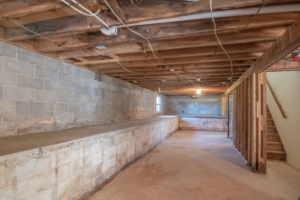 A crack in a foundation does not automatically mean the house is falling down. Some cracks are relatively minor. Others may indicate movement, drainage problems, inadequate support, or a larger structural issue.
The difficulty is determining which kind you are looking at. That may require more than a general home inspection. You may need additional evaluation from a structural engineer, foundation contractor, drainage specialist, or geotechnical professional.
Foundation projects can also take time to design, permit, schedule, and complete. Once work begins, contractors may discover conditions that were not visible during the initial inspection.
That is where a seemingly manageable project can become much larger.
When buyers face this kind of uncertainty, I encourage them to ask:
- Do we understand the cause of the problem?
- Do we have a reliable scope of work?
- Have qualified professionals estimated the cost?
- Is the issue stable, or is it continuing to worsen?
- Will the lender approve the property?
- Will an insurance company cover it?
- Can I afford the project if the final cost exceeds the estimate?
- Am I willing to live through the work?
If you cannot get satisfactory answers within the timeline provided by your contract, walking away may be the safest decision.
The Inspection Contingency Is a Decision-Making Period
A home inspection is not simply a checklist of defects. It is your opportunity to gather information and decide whether you still want to own the property.
When a purchase agreement is contingent on a satisfactory inspection, a buyer may be able to cancel if serious defects are discovered, subject to the terms of the contract. The buyer may also try to negotiate repairs, credits, or another resolution with the seller.
Following the inspection, your practical options may include:
- Accepting the property “as is”
- Asking the seller to complete repairs
- Requesting a credit toward closing costs
- Negotiating a lower purchase price
- Requesting additional time or specialist inspections
- Terminating under the applicable contingency
The seller does not have to agree to your requested repairs or credit. That is why the decision cannot be based solely on what you hope the seller will do. You also need to know what you will do if the seller says no.
A Credit Is Not the Same as Having the Repair Completed
Buyers often prefer credits because they can hire their own contractor and control the quality of the work after closing.
 That can be a good solution, but it comes with limitations.
Your lender may restrict the amount or type of credit you can receive. A credit also does not put cash directly into your bank account in every situation. It generally offsets allowable closing costs and prepaid expenses.
In addition, a credit based on an early estimate may not cover the entire repair if the project turns out to be more expensive.
Before accepting a credit, make sure you understand:
- The likely total cost
- Whether the repair can safely wait
- Whether the lender will permit the condition
- How much of the credit you can actually use
- Whether you will have enough cash after closing to finish the work
Sometimes a price reduction looks attractive but does not solve the immediate problem either. A $20,000 reduction in the purchase price will lower the monthly payment somewhat, but it will not necessarily give you $20,000 in cash to replace the roof next month.
The structure of the negotiation matters.
When an Inspection Problem May Be a Reason to Walk Away
I would seriously consider walking away when the problem is both substantial and not 100% clear. Other warning signs may be:
- The repair would consume all your remaining savings
- The seller will not allow enough access for further investigation
- Specialists cannot determine the scope within your contingency period
- The issue threatens the home’s safety or habitability
- The property may be uninsurable
- The lender will not finance the home in its current condition
- The seller refuses to address a problem that you cannot accept
- The numbers no longer make sense after realistic repair costs
- You already feel overwhelmed before you even own the property
You do not need to prove that the home is objectively terrible. You only need to determine that it is no longer the right purchase for you.
What Happens When the Appraisal Comes in Low?
The second major concern is if an appraisal comes in lower than the purchase price.
 In many financed transactions, the lender orders an appraisal to obtain an independent opinion of the property’s value. The appraisal describes the property and typically compares it with other relevant sales in the area. The lender uses that value when determining how much it is willing to lend.
The loan-to-value ratio compares the loan amount with the property’s appraised value. A lower appraisal can therefore affect the available loan amount, required down payment, and whether the financing works as originally planned.
For example, imagine that you agree to purchase a home for $500,000.
You plan to borrow 80% of the price, or $400,000, and contribute $100,000 as your down payment.
Then the appraisal comes in at $470,000.
The lender may calculate the loan using the lower appraised value rather than the $500,000 contract price. That can create a gap between the amount the seller expects and the amount your financing will support.
A Low Appraisal Does Not Automatically End the Deal
When an appraisal comes in below the contract price, several outcomes may be possible.
The seller may lower the price
You can return to the seller and ask for the purchase price to be reduced to the appraised value or somewhere closer to it.
A seller may agree because the next buyer could encounter the same appraisal problem.
However, the seller might also believe another buyer will pay more, bring additional cash, or waive appraisal protections.
The buyer may bring additional cash
A buyer can sometimes pay the difference between the supported loan amount and the agreed purchase price. That does not necessarily mean you should.
Paying above the appraised value may be reasonable for a buyer who understands the market, expects to hold the property for a long time, and has substantial reserves.
It may be a bad decision for a buyer who would have to empty savings, borrow money, or sacrifice funds needed for immediate repairs.
The parties may meet somewhere in the middle
Sometimes the seller reduces the price and the buyer contributes part of the appraisal gap.
This can preserve the transaction while sharing the risk.
The loan may be restructured
Depending on the buyer’s qualifications and loan program, the lender may be able to revise the down payment or financing structure.
This needs to be discussed directly with the lender. A real estate agent should not guess about what a loan program will allow.
The buyer may challenge the appraisal
A low appraisal is not automatically incorrect. However, buyers can raise concerns when the report appears to contain factual errors, inappropriate comparable properties, or missing relevant information.
Can You Challenge an Appraisal?
There is a formal process called a reconsideration of value, often shortened to ROV.
Through this process, the borrower can ask the lender to review concerns about an appraisal. Fannie Mae requires lenders to maintain procedures for borrower-initiated reconsideration requests on applicable loans.
A useful request may identify:
- Incorrect square footage
- The wrong number of bedrooms or bathrooms
- Missing updates or improvements
- Property-condition errors
- Comparable sales that are not genuinely similar
- Relevant sales that were overlooked
- Market data that supports a different conclusion
The appraiser remains responsible for selecting and analyzing the most appropriate comparable sales. Comparable properties should have similar physical and legal characteristics, including factors such as location, site, size, style, room count, and condition.
A reconsideration request is not simply, “We don’t like the number. Please make it higher.” It should be based on specific, supportable information.
The outcome could remain unchanged. But when the report contains a meaningful error or omission, the review is worth pursuing.
Why Rapid Markets Can Make Appraisals Difficult
Appraisals rely heavily on closed sales. The challenge is that closed sales reflect agreements made weeks or even months earlier.
 In a rapidly appreciating market, the most recent closed comparables may lag behind what buyers are currently willing to pay.
Imagine several similar homes closed around $600,000, but they went under contract two months ago. Current buyers may now be competing around $625,000.
An appraiser has to support the value with market evidence. A signed contract is relevant, but the contract price alone does not prove that the property is worth that amount. This can create tension when buyers are bidding based on today’s competition while the available closed data reflects yesterday’s market.
The opposite can happen in a declining market. Older closed sales may support prices that current buyers are no longer willing to pay. That is why I look carefully at both closed sales and current market activity when advising clients, while recognizing that an appraiser must follow professional valuation standards and lender requirements.
When a Low Appraisal May Be a Reason to Walk Away
A low appraisal may be a reason to terminate when:
- You cannot afford the additional cash required
- Using extra cash would eliminate your emergency reserves
- The seller refuses to reduce the price
- The lender cannot restructure the financing
- The reconsideration process does not change the value
- You no longer believe the home is worth the agreed price
- Paying the gap would interfere with needed repairs or improvements
- The contract gives you a valid termination right, and leaving is the wiser decision
Do not let the amount of time already invested push you into a bad financial choice. By the time the appraisal arrives, you may have paid for inspections, completed paperwork, imagined where your furniture will go, and told everyone you are moving.
Those things can make it emotionally difficult to walk away. But they do not make the house worth more, and they do not create money that is not in your budget.
Never Assume You Can Walk Away Without Consequences
Contingencies offer important protections, but they are not unlimited permission to cancel at any time for any reason.
They have deadlines.
They may require written notices.
They may expire or be waived.
The result can also depend on whether the buyer has acted in good faith and complied with contractual obligations. Canceling outside an available contractual right could put the buyer’s earnest money at risk and potentially create other legal exposure.
Before terminating a transaction, I want my clients to be very clear about:
- Which contingency applies
- Whether it is still active
- What the contract requires
- What notice must be delivered
- Whether the earnest money should be refunded
- Whether legal advice is appropriate
This is one reason representation matters. In Oregon and Washington, buyers working with a real estate licensee are required to have a written buyer representation agreement, which helps clarify the relationship, expectations, and responsibilities involved in the purchase process.
Questions to Ask Before You Walk Away
When the transaction becomes difficult, I encourage buyers to pause and answer a few questions.
Is the problem fixable?
Almost every physical issue is technically fixable with enough time and money.
The better question is whether it is fixable within your available budget, timeline, and tolerance for disruption.
Do we know the real cost?
A guess from a general inspector is not the same as a written estimate from a qualified specialist.
Get as much information as the contingency timeline reasonably allows.
 Can the seller help solve it?
Repairs, credits, price reductions, or another form of negotiation may make the transaction workable.
Do not assume the answer will be no, but do not depend on the seller saying yes.
Will the lender and insurer accept the property?
Some conditions affect more than your personal preferences. They may also affect financing or insurance.
What will my finances look like after closing?
You still need money for moving, emergencies, maintenance, and the inevitable surprises that come with homeownership.
Would I still choose this house knowing what I know now?
This is often the most revealing question.
Try to separate your current knowledge from the excitement you felt when you first walked through the property.
Frequently Asked Questions About Real Estate Contingencies
Can I walk away after a bad home inspection?
You may be able to terminate if your contract contains an active inspection contingency and you follow its deadlines and notice requirements. The exact answer depends on the agreement you signed.
Does the seller have to make inspection repairs?
Not necessarily. A buyer can request repairs, a credit, or a price reduction, but the seller may reject the request unless the contract creates a specific obligation.
Can I cancel if the appraisal is low?
Possibly. An active appraisal or financing contingency may provide a path to terminate, renegotiate, or restructure the transaction. The wording of the contract controls.
Can the appraiser see the purchase price?
In a purchase transaction, the appraiser generally analyzes the signed contract as part of the appraisal assignment. However, the appraiser’s opinion must still be independently supported by the property and market data.
What is a reconsideration of value (ROV)?
A reconsideration of value is a process through which a borrower asks the lender to review possible appraisal errors, omissions, or relevant additional information. It does not guarantee that the appraised value will change.
Will I lose my earnest money if I walk away?
That depends on the contract, timing, reason for termination, and whether you followed the applicable procedures. Buyers should not assume their earnest money will automatically be returned.
My Final Thoughts
There is no perfect formula for deciding when to walk away from a real estate deal. A major repair does not automatically mean you should cancel. A low appraisal does not automatically mean the house is overpriced. And a seller’s refusal to make repairs does not automatically mean the transaction is over.
But every new piece of information should cause you to reevaluate the purchase.
Your goal is not to close at any cost. Your goal is to buy a home that makes sense for your finances, your lifestyle, and your long-term plans.
Sometimes that means negotiating through a difficult inspection. Sometimes it means bringing additional cash to overcome an appraisal gap. Sometimes it means taking on a project because you have the resources and experience to handle it. And sometimes it means using the protection in your contract, collecting your earnest money when permitted, and moving on to the next house.
Walking away can be disappointing. It can also be one of the best decisions you make during the home-buying process. The right home is not simply the one you love. It is the one you can responsibly purchase, maintain, and enjoy after the transaction is complete.
About Claire Paris
 Claire Paris is the Owner and Principal Broker of Paris Group Realty, LLC. She has been practicing real estate since 2004 and is licensed in both Oregon and Washington.
If you have a real estate question you’d like me to answer in a future Dear Claire, we’d love to hear it. And if you’re thinking about buying, selling, or investing in real estate, our team is always here to help. Get in touch—we’d love to be part of your next chapter.
Looking for more real estate tips and advice? Be sure to subscribe to the Paris Group Realty, LLC YouTube channel, where you’ll find hundreds of videos covering everything from buying and selling a home to Portland neighborhoods, home maintenance, financing, market updates, investment properties, and answers to many of the most common real estate questions.