
Buying Your Next Home Before Selling in Portland
Is it possible to buy before you sell in 2026?
For many Portland homeowners, the idea of making a move comes with one big logistical question:
Do I need to sell my current home before I buy my next one?
It’s one of the most common concerns we hear—and for good reason. Moving from one home to another isn’t just a financial decision, it’s a timing puzzle. You’re trying to line up two major transactions, each with its own variables, and make them fit together in a way that feels smooth and low-stress.
The good news is that in today’s Portland market, there are more ways to approach this than you might think.
The better news? You don’t have to default to one path. With the right strategy, buying before selling can absolutely be possible—it just depends on your specific situation.
Why This Question Matters More Right Now
Over the past few years, the way people move between homes has shifted.
During the peak pandemic market, buying first was often difficult. Competition was intense, timelines were compressed, and sellers favored offers without contingencies. Many homeowners felt they had no choice but to sell first in order to compete.
Today, the Portland market feels different.
While still active, it’s generally more balanced. Buyers often have more time to make decisions, and sellers are more open to flexible terms. That shift has reopened the conversation around buying before selling—and for many homeowners, that can be a game changer.
At the same time, interest rates and affordability are part of the equation. Homeowners who locked in low rates in previous years are weighing how to transition into a new home without losing financial footing.
All of this makes the strategy behind your move just as important as the move itself.
The Appeal of Buying Before Selling
 At a high level, buying before selling offers something simple but powerful: control.
Instead of rushing to find your next home after selling, you can take your time. You can explore neighborhoods, wait for the right fit, and move on your own timeline rather than reacting to a closing date.
There’s also a practical benefit. You avoid the need for temporary housing, double moves, or storing belongings in between homes. The transition feels more seamless.
Emotionally, it can make a big difference too. You’re not making decisions under pressure. You’re choosing your next home because it fits—not because the clock is ticking.
For many homeowners, that peace of mind is worth exploring.
The Biggest Challenge: Accessing Your Equity
If buying first is so appealing, why doesn’t everyone do it?
The answer usually comes down to equity.
For most homeowners, a significant portion of their wealth is tied up in their current home. That equity is often needed to fund the down payment on the next property.
Without accessing that equity, buying another home can feel out of reach.
This is where strategy comes into play. There are multiple ways to bridge that gap—it just depends on your financial position, comfort level, and goals.
Option 1: Buying First with Strong Financial Positioning
Some homeowners are in a position to purchase their next home without immediately selling their current one.
This might be because they have sufficient savings for a down payment, strong income that supports carrying two mortgages temporarily, or access to other financial resources.
In these cases, buying first can be relatively straightforward. You secure your next home, move in, and then prepare your current home for sale without the pressure of aligning timelines.
Once your original home sells, you can use the proceeds to pay down the new mortgage or replenish savings.
This approach offers maximum flexibility—but it requires a clear understanding of your financial capacity and risk tolerance.
Option 2: Bridge Solutions
 For homeowners whose equity is tied up in their current property, bridge solutions can help unlock that value before selling.
Bridge loans, for example, allow you to borrow against your existing home’s equity to fund the purchase of your next one. These are typically short-term loans designed to “bridge” the gap between buying and selling.
There are also other financing strategies, such as home equity lines of credit (HELOCs), that can provide access to funds.
These options can make buying first possible, but they come with important considerations—interest rates, repayment timelines, and qualification requirements all play a role.
The key is understanding how these tools fit into your overall financial picture.
Option 3: Making a Contingent Offer
Another path is to write an offer on your next home that is contingent on the sale of your current one.
In this scenario, you secure a buyer for your existing home and use that pending sale to support your purchase.
In highly competitive markets, contingent offers can be challenging. But in today’s more balanced Portland market, they are becoming more viable again—especially when structured thoughtfully.
Sellers may be more open to these offers if:
-
Your home is already on the market
-
You have strong pricing and preparation in place
-
The timeline is clear and reasonable
This approach reduces financial risk, but it requires coordination and a strong strategy to make it appealing to sellers.
Option 4: Selling First (and Why It Still Works)
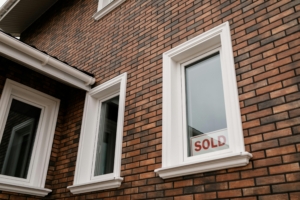 Even with all the options available, selling first is still the most common approach—and for good reason.
It provides clarity. You know exactly how much your home sold for, how much equity you’re working with, and what your budget is for the next purchase.
It also reduces financial risk. You’re not carrying two properties at once, and you don’t need to rely on bridge financing.
The tradeoff is timing. You may need temporary housing or a flexible plan while you search for your next home.
For some homeowners, that tradeoff is worth it. For others, it’s something they’d prefer to avoid.
How the Portland Market Impacts Your Strategy
The right approach isn’t just about your finances—it’s also about the market you’re operating in.
In Portland right now, we’re seeing conditions that support more flexibility than in recent years. Homes are still selling, but often with more reasonable timelines. Buyers have more room to negotiate, and sellers are more open to creative solutions.
This creates opportunities for strategies like contingent offers or buying first with a well-structured plan.
At the same time, every property and price point behaves a little differently. Some segments of the market are still competitive, while others offer more breathing room.
Understanding where your home and your target purchase fall within that spectrum is key.
The Emotional Side of the Move
 Beyond logistics and finances, there’s also an emotional component to consider.
Moving is a transition. It involves letting go of one space and stepping into another. Trying to coordinate both at the same time can feel overwhelming.
Buying first can ease that transition, giving you time to settle into your new home before closing the chapter on your old one.
Selling first can create a sense of closure, allowing you to move forward with a clear understanding of your next step.
Neither approach is inherently better—it’s about what feels manageable and aligned for you.
What to Consider Before Deciding
If you’re weighing whether to buy before selling, it’s worth stepping back and looking at the full picture.
Your equity position is a starting point. So is your comfort with financial risk. How long could you realistically carry two homes if needed? What does your timeline look like?
It’s also important to think about your priorities. Is finding the right home without pressure the most important factor? Or is minimizing financial exposure your top concern?
There’s no universal answer—only the answer that fits your situation.
A Strategy, Not a Guess
The biggest mistake homeowners make in this process is treating it like a guess rather than a strategy.
Buying and selling at the same time isn’t something you have to figure out on your own. With the right planning, the moving pieces can be coordinated in a way that feels intentional rather than chaotic.
That includes understanding your home’s value, mapping out financial scenarios, and aligning timelines in a way that works.
Let’s Talk Through What This Could Look Like for You
If you’re starting to think about making a move, the most helpful first step is simply exploring your options.
We can walk through:
-
What your home is likely to sell for in today’s market
-
How much equity you have to work with
-
What buying before selling might look like financially
-
Which strategy best fits your goals and comfort level
From there, you can decide how—and when—you want to move forward.
The Bottom Line
 Buying your next home before selling your current one is absolutely possible in Portland in 2026—but it’s not one-size-fits-all.
It depends on your finances, your goals, and the strategy you use to approach the process.
The good news is you have options. More than you might think.
And with the right plan in place, moving from one home to the next can feel less like a juggling act—and more like a step forward.